Garbage Collection Dubai: Sustainable Waste Management Guide
Garbage Collection Dubai: Complete Guide to Sustainable Waste Management & Recycling
We present a practical, action-driven guide that explains garbage collection Dubai, local waste policies, recycling programs, hazardous waste disposal, and proven sustainability strategies for businesses and communities. We write in the we voice, focus on clarity, and provide concrete, local-first recommendations so readers can act today.
1. Introduction: Why Garbage Collection Dubai Matters
We view garbage collection in Dubai not as an expense but as a strategic asset. When managed well, waste collection becomes a lever for energy, jobs, and healthier neighborhoods. Dubai’s drive toward a circular economy means garbage collection Dubai is increasingly tied to climate targets, industry competitiveness, and urban liveability. What changes when bins become resources? For starters, neighborhoods smell better, companies cut costs, and the city gets closer to its zero-landfill goals.
Dubai is implementing an integrated 20-year plan that aligns incentives, infrastructure, and regulations to transform waste streams into value. These changes are backed by law and major projects such as the Dubai Waste Management Centre which combine treatment, recycling, and waste-to-energy technologies. The result: a staged pathway away from landfills toward energy recovery, advanced recycling, and composting.
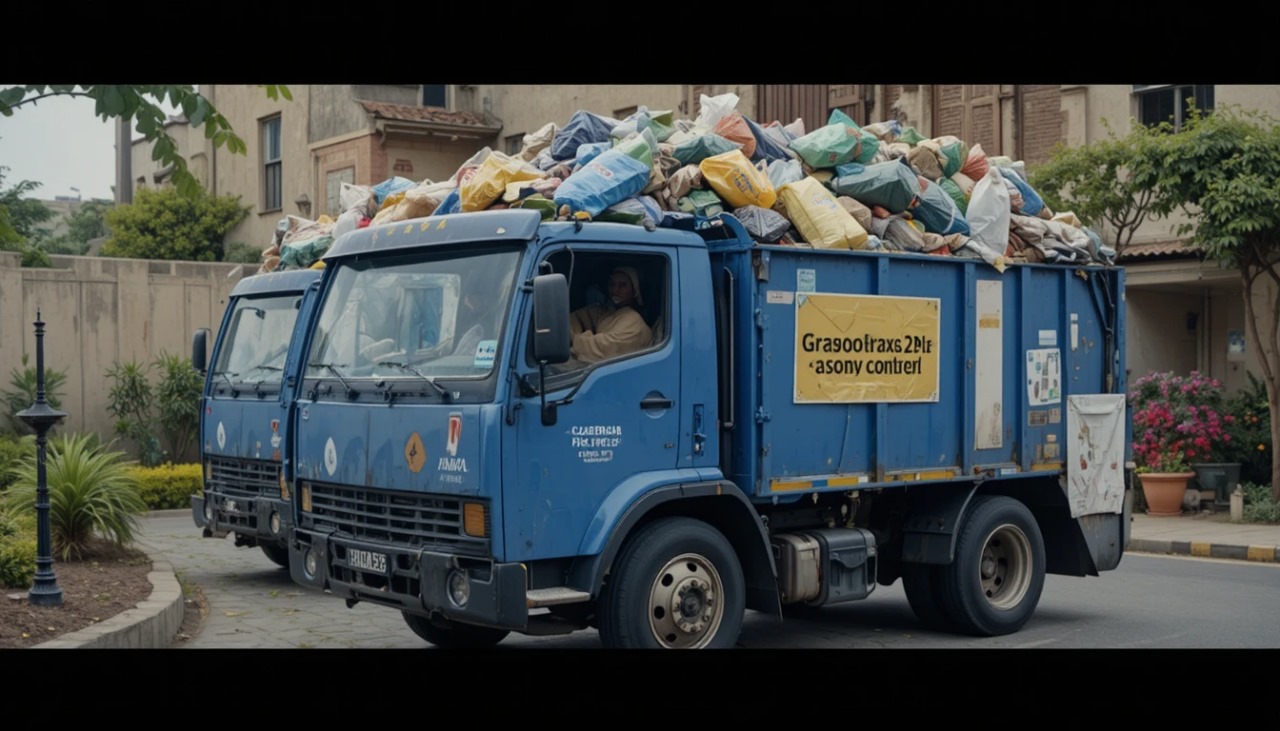
2. Dubai’s Waste Management Vision & Laws: Garbage Collection Dubai
Dubai has formalized a long-term strategy (2021–2041) that aims to reduce landfill dependency and maximize material recovery through policy, regulation, and private sector partnerships. Furthermore, updated legislation such as Law No. (18) of 2024 tightens standards for waste handling, recycling requirements, and penalties for non-compliance a regulatory shift that raises the bar for businesses doing waste management in Dubai. This regulatory backbone ensures standards are not just aspirational but enforceable.
Key legal touchpoints we watch:
- Licensing for waste transport and recycling operators.
- Mandatory reporting and permits for hazardous and industrial waste movements.
- Incentives for waste-to-energy infrastructure and recycling investments.
Given these laws, businesses should view compliance as both legal duty and market opportunity: fines are real, but so are contracts with municipalities and access to new revenue from recovered materials.
3. Municipal Solid Waste Management in Dubai: An Overview
Municipal solid waste (MSW) covers household, commercial, and institutional trash. Dubai’s volume has grown with population and tourism, pushing planners to create large-scale solutions. A significant step has been the construction of modern integrated facilities designed to sort, process, and extract energy from MSW rather than merely bury it.
At present, Dubai is investing in centralized processing centers with capacity to reduce landfill input dramatically. These facilities combine mechanical sorting, material recovery facilities (MRFs), and energy conversion systems. The strategic mix aims to capture recyclables, divert organics for compost or anaerobic digestion, and use residual streams for energy generation. This transition is mirrored by targets from United Arab Emirates national strategies to treat and divert large percentages of waste off landfills.
4. Types of Waste Generated in Dubai: Garbage Collection Dubai
Understanding waste composition is the first step to smart collection. Dubai’s common categories include:
- Household/Residential waste (food, packaging, textiles).
- Commercial waste (retail packaging, office paper).
- Industrial waste (manufacturing by-products).
- Construction & demolition (C&D) debris (concrete, metals, timber).
- Hazardous waste (chemicals, used oils, solvents, medical waste).
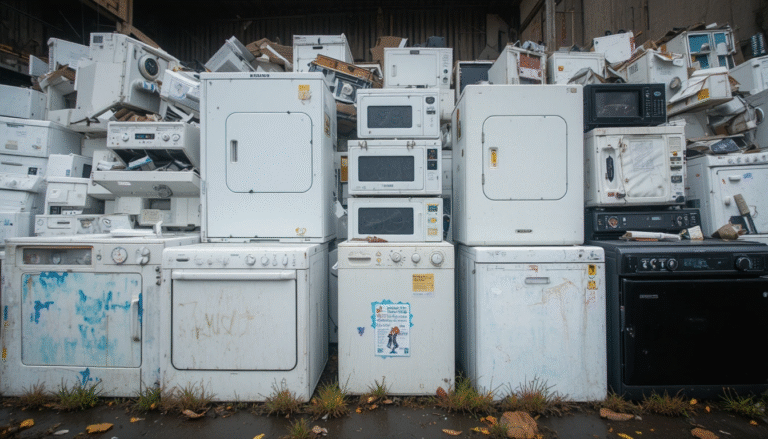
- E-waste (electronics, batteries).
- Green waste (garden and landscaping debris).
For collection efficiency, we recommend classifying streams at source. Separation reduces contamination, increases recycling yields, and lowers disposal costs. In practice, simple color-coded bins plus clear labeling and education achieve major gains for communities and businesses alike.
5. Garbage Collection Dubai: How Collection Works
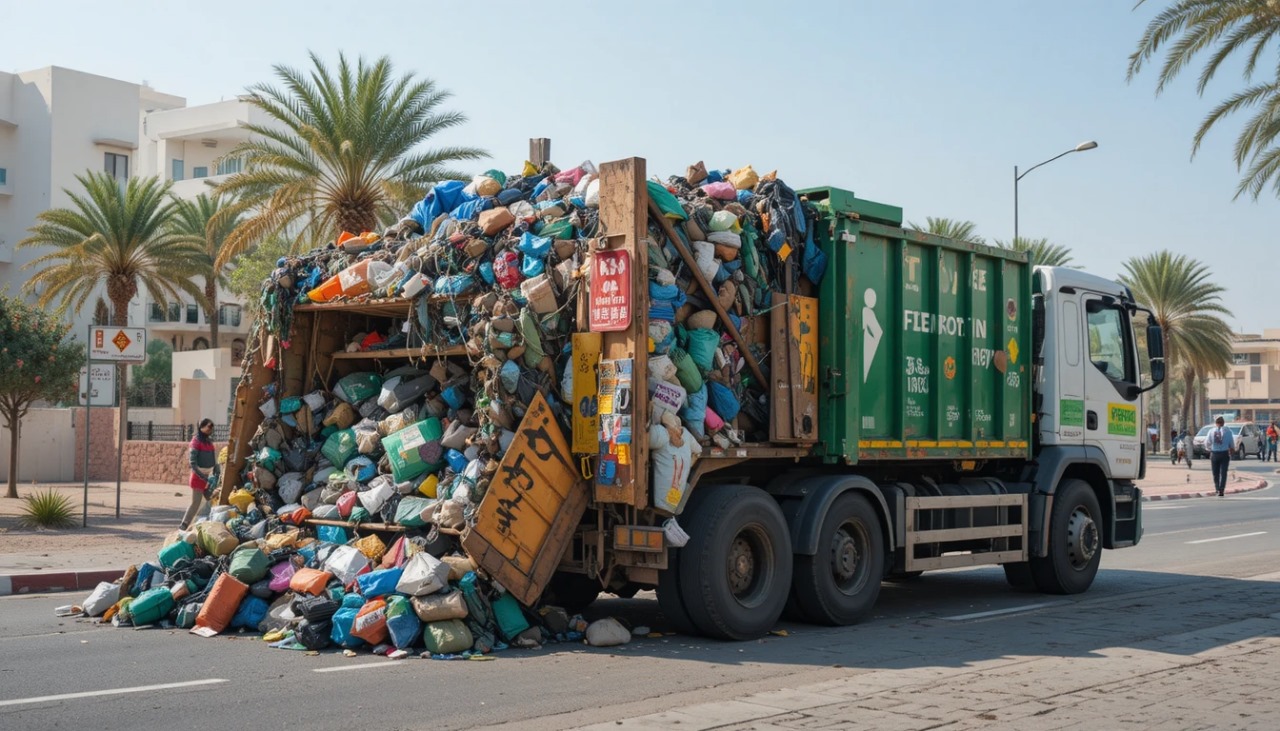
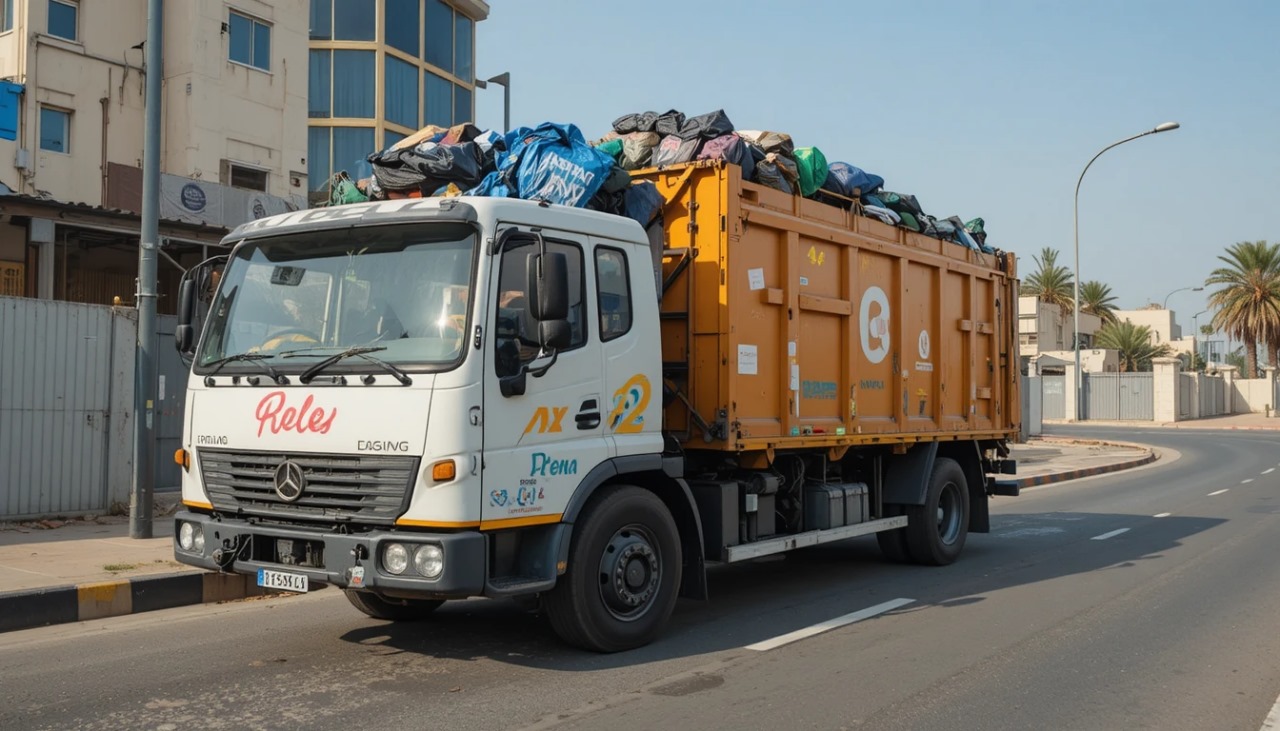
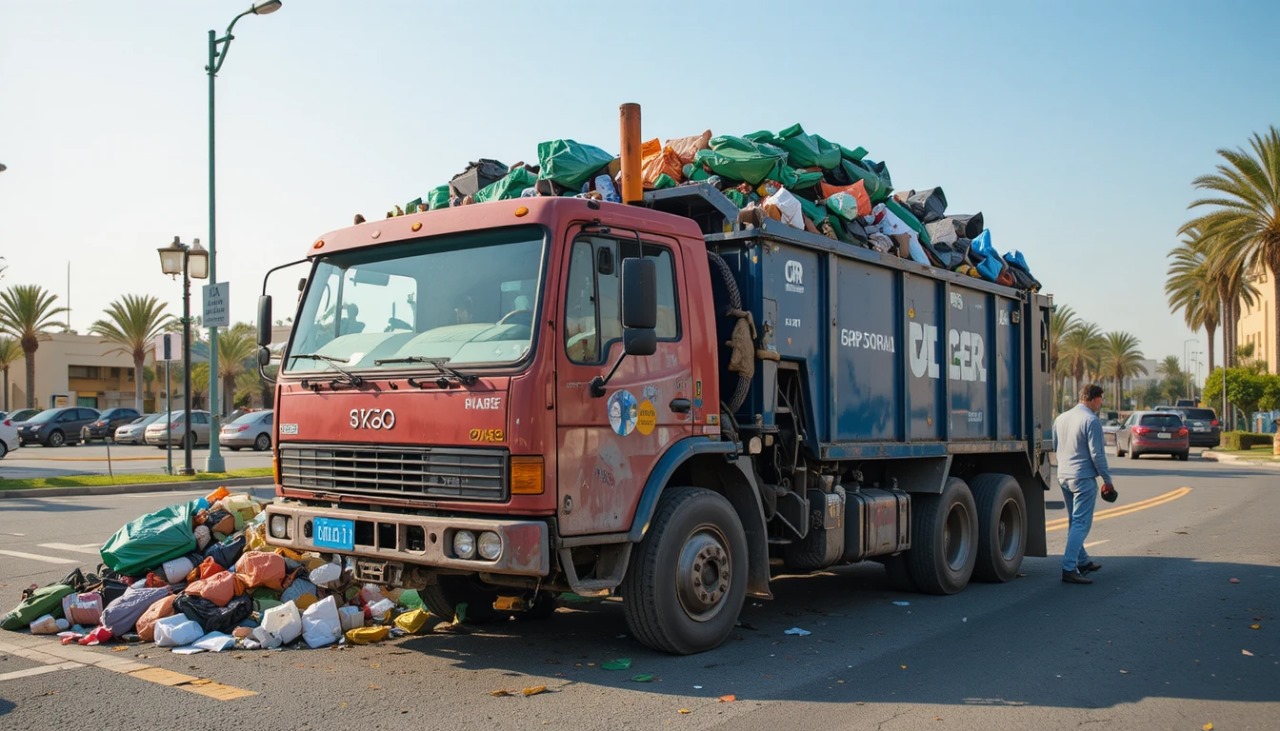
Garbage collection Dubai typically follows a route-based model: designated trucks collect waste from residential and commercial bins according to fixed schedules. Private operators often contract with communities or businesses; meanwhile, Dubai Municipality oversees infrastructure, regulatory compliance, and large facilities.
Service types:
- Curbside pickup for households.
- Commercial dumpsters with scheduled or on-demand pickups.
- Bulky-item and C&D collections by permit.
- Hazardous pickup through licensed handlers.
To maximize efficiency, many providers now use telematics and route optimization; additionally, waste collection apps let residents report missed pickups and schedule special collections. For neighborhoods with high recycling adoption, separate collection streams for paper, plastic, glass, and organics increase recovery rates and lower residual costs.
6. Household Waste Collection Dubai: Schedules & Best Practices
Household waste collection is the frontline for any citywide recycling ambition. Effective collection depends on predictable schedules, accessible bin locations, and clear rules. We advise households to:
- Place bins at kerbside by the time specified in the waste collection schedule Dubai.
- Rinse containers to reduce contamination.
- Flatten cardboard and bundle recyclables where required.
- Use organics/green bins for food scraps and garden waste if available.
Communication is essential: residents must know their pickup days, what goes in which bin, and who to contact if a collection is missed. Tools such as waste collection apps Dubai increase transparency and resident engagement, turning passive neighbors into active participants in local recycling programs.
7. Local Garbage Collection Dubai: Residential Options
Options for residents range from standard municipal curbside to subscription services offering recycling pickup, compost pickup, or bulky waste removal. Many gated communities contract tailored services with private providers to manage mixed-use waste streams. For renters and small apartment complexes, shared bins with clear signage and compactor systems reduce volume and costs.
We also recommend community-level measures such as establishing neighbourhood drop-off points for recyclable materials, hosting quarterly collection drives, and coordinating with local recycling partners to accept specialized items like batteries and small electronics.
8. Green Waste Collection Dubai & Organic Waste Management
Green waste (garden trimmings, food scraps) is a resource when captured separately. Composting and anaerobic digestion convert organics into valuable soil amendments or biogas. For Dubai’s climate, controlled systems such as aerated static piles or in-vessel composting work best to maintain process stability despite heat.
Municipal and private initiatives increasingly offer green waste collection Dubai services, often linked to community gardens or landscaping contractors. For businesses, source separation at restaurants and food markets reduces contamination and creates a feedstock for commercial composting or biogas projects.
Why act? Separating organics lowers landfill methane emissions, enriches soil, and can reduce water use in landscaping turning waste into a circular benefit.
9. Recyclable Materials in Dubai: What You Can Recycle
Recyclable streams typically include:
- Paper and cardboard (flattened).
- Plastics (PET bottles, HDPE containers).
- Glass (bottles and jars).
- Metals (aluminum cans, steel).
- Electronic waste (handled separately).
- Textiles (where drop-off programs exist).
We emphasize avoiding contamination: greasy pizza boxes, soiled diapers, and mixed-material items degrade recyclate quality. Clear labeling and citizen education drastically improve material recovery rates.
10. Recycling Programs in Dubai (Residents & Businesses)
Recycling programs in Dubai vary by area and can include kerbside sorting, MRF-supported collections, drop-off depots, and corporate take-back schemes. Dubai Municipality and private firms operate initiatives targeting PET bottle collection, cardboard recovery, and large-scale plastic packaging recycling campaigns. For businesses, partnerships with recyclers can convert receipt paper, packaging, and office waste into revenue streams or cost savings.
Notably, Dubai’s municipal drive and private investment aim to scale recycling capacity and integrate facilities with larger processing hubs a trend that improves economics for both small and large recyclers.
11. Dubai Recycling Programs for Businesses & Small Enterprises
Businesses benefit when recycling becomes routine: reduced disposal fees, brand uplift, and sometimes direct returns from recovered materials. Practical steps include:
- Conduct a waste audit to identify diversion opportunities.
- Use streamlined bins: paper, mixed recyclables, organics, residuals.
- Contract with licensed waste collectors and request diversion reports.
- Train staff on sorting and contamination avoidance.
For small businesses, joining aggregated collection schemes increases feasibility and cost-effectiveness. Examples include pooled cardboard pickups or scheduled e-waste drop-offs for multiple retailers.
12. Community Recycling Initiatives for Businesses
Community-business partnerships amplify impact. For instance, retail centers can host recycling kiosks; cafés can supply separated organics for local composting; office parks can centralize collection to a single service point. We recommend incentives such as recognition programs or small financial rewards for tenants that lower waste per square meter. This collaborative approach creates a multiplier effect communities act, businesses benefit, and the city advances toward its recovery targets.
13. Corporate Social Responsibility & Recycling in Dubai
CSR programs that integrate recycling align environmental stewardship with brand strategy. Companies can:
- Sponsor neighborhood cleanup events.
- Fund recycling education in schools.
- Adopt sustainable packaging alternatives for products.
These initiatives help businesses demonstrate measurable sustainability performance, improve stakeholder trust, and sometimes unlock government incentives or preferential procurement.
14. Recycling Education for Schools & Community Events
Education builds mindful recyclers. We advise programs that combine classroom lessons, practical sorting exercises, and school-led collection drives. Community recycling events like weekend drop-off days for plastics or electronics raise visibility and channel materials to licensed processors. Engaging youth yields long-term behavior change, and schools can model composting and circular practices on-site.
15. Hazardous Waste Management Regulations & Disposal Dubai
Hazardous waste requires strict control. Laws prohibit unpermitted movement of hazardous materials and mandate licensed handlers for collection, transport, and disposal. For businesses generating hazardous streams (solvents, used oils, certain batteries), compliance requires documented manifests, special containers, and coordination with approved transporters. These rules align with international conventions (e.g., the Basel Convention) and UAE national controls to prevent cross-border and local environmental harm.
16. Industrial Waste Disposal Dubai: Obligations & Best Practice
Industrial operations must document waste generation, segregate hazardous from non-hazardous streams, and apply the waste hierarchy: reduce, reuse, recycle, recover (energy), then safe disposal. Best practices include on-site segregation, vendor qualification for waste handlers, and periodic audits. When industries adopt these measures, they lower environmental liability and often discover cost savings from reduced raw-material usage and resale of by-products.
17. Construction Waste Management Dubai: Strategies & Compliance
C&D waste is high-volume but high-value: concrete, metals, timber, and aggregates are often recyclable. Best practice includes:
- Pre-demolition audits.
- Dedicated on-site separation and compactors.
- Contracts with recycling yards for concrete crushing and metal recovery.
Dubai’s regulations increasingly require waste management plans for large projects plans that lower disposal costs and support circular construction practices.
18. Ewaste Disposal in Dubai: Safe Routes & Programs
E-waste contains recoverable metals and hazardous components, so it must be handled by authorized recyclers. Programs include manufacturer take-back schemes, municipal e-waste drives, or private collection services. We recommend businesses maintain secure data-destruction procedures before sending electronics for recycling, and residents use approved drop-off points to avoid informal channels.
19. Medical Waste Management Practices Dubai: Garbage Collection Dubai
Medical and healthcare waste is regulated tightly for infection control. Segregation at source, color-coded containers, on-site treatment (autoclaves or incineration for specific streams), and licensed transporters are essential. Facilities must track and document disposal routes and adopt occupational safety measures, protecting staff and public health.
20. Biodegradable Waste Solutions & Composting Benefits
Composting transforms kitchen scraps and garden waste into nutrient-rich soil. For urban Dubai, in-vessel or centralized commercial composting systems are more feasible than backyard piles due to climate. Benefits include improved soil health, reduced landfill methane, and lower fertilizer costs for landscaping projects. When scaled, composting integrates seamlessly with green-space maintenance and sustainable landscaping programs.
21. Landfill Alternatives in Dubai: Waste-to-Energy & Circular Options
Landfill alternatives are central to Dubai’s strategy. Large waste-to-energy (WTE) facilities convert residual streams into electricity and heat, reducing landfill use and recovering energy value. Complementary measures include mechanical-biological treatment, enhanced recycling, and material recovery facilities. Dubai’s investments in WTE infrastructure demonstrate a pivot from disposal to recovery, and they are core to the Emirate’s goal of sharply reducing landfill dependency.
Analogy: Think of landfills as old savings accounts gathering dust, whereas WTE and recycling convert that dormant balance into productive capital.
22. Innovations in Garbage Collection Dubai: AI, IoT & Drones
Technologies accelerate efficiency: AI-powered sorters improve material recovery, IoT sensors optimize collection routes and bin-emptying, and drones can provide aerial monitoring of illegal dumping sites or landfill conditions. Startups in Dubai are piloting smart bins and platform-based waste marketplaces that match recyclable supply with processors. These digital layers reduce cost and provide transparency needed for scaling circular operations.
23. Waste Management Apps, Schedules & Temporary Bins
Digital tools: apps for scheduling pickups, reporting illegal dumping, and ordering temporary bins improve service reliability and citizen engagement. Temporary waste bins for events and construction sites must be arranged in advance, and apps often allow tracking and invoicing for such services. We recommend communities adopt municipality-endorsed apps to ensure accuracy and compliance.
24. Waste Audit Process for Local Firms & Compliance Checklist
A waste audit reveals what is thrown away and where to intervene. The process includes:
- Data collection: measure volumes by stream.
- Characterization: identify types and contamination levels.
- Cost analysis: quantify disposal and missed recycling revenue.
- Action plan: set diversion targets and implement separation.
Regular audits, combined with employee training, yield measurable reductions in waste costs and environmental footprint.
25. Cost Savings Through Waste Reduction & Ecofriendly Practices
Reducing waste reduces costs. Simple measures like bulk purchasing to cut packaging, composting food scraps to lower organic disposal fees, and recovering valuable recyclables improve margins. Furthermore, sustainable packaging alternatives and process improvements often generate savings that outweigh initial investment. We advise businesses to measure diversion rates and report savings as part of performance metrics.
26. Incentives, Permits & Fines: Legal Framework for Businesses
Businesses must secure permits for waste transport, apply for specialized disposal for hazardous streams, and comply with reporting obligations. Noncompliance can trigger fines or stop-work orders. Conversely, incentives such as grants, pilot program access, or procurement preferences may be available for companies that adopt verified circular practices or invest in green technology. Check municipality resources and national programs for current opportunities.
27. Public Awareness Campaigns: Garbage Collection Dubai
Government campaigns: including large-scale collection drives and education programs are vital. Dubai Municipality and national entities regularly run initiatives to increase recycling participation, reduce single-use plastics, and promote sustainable packaging. Public awareness ensures programs are used correctly and that recovered materials meet quality standards for remanufacture.
28. Community Involvement: Volunteer, Cleanups & Partnerships
Communities multiply impact through volunteer cleanups, local drives, and partnerships with recycling NGOs. Businesses can sponsor events or offer logistics support, creating a sense of shared ownership. We suggest forming local committees to coordinate drop-off days, disseminate collection schedules, and work with municipality teams for larger campaigns.
29. Future of Waste Management in Dubai: Goals & Roadmap
Dubai’s roadmap embraces zero-landfill ambitions, high recycling targets, and large-scale infrastructure investments. Targets embedded in national and local strategies aim to divert the majority of waste streams from landfills while recovering energy and materials. Continued progress depends on enforcement, private investment, and citizen engagement. The integrated strategy offers predictable policy signals that investors and service providers can rely on to scale new solutions.
30. Conclusion
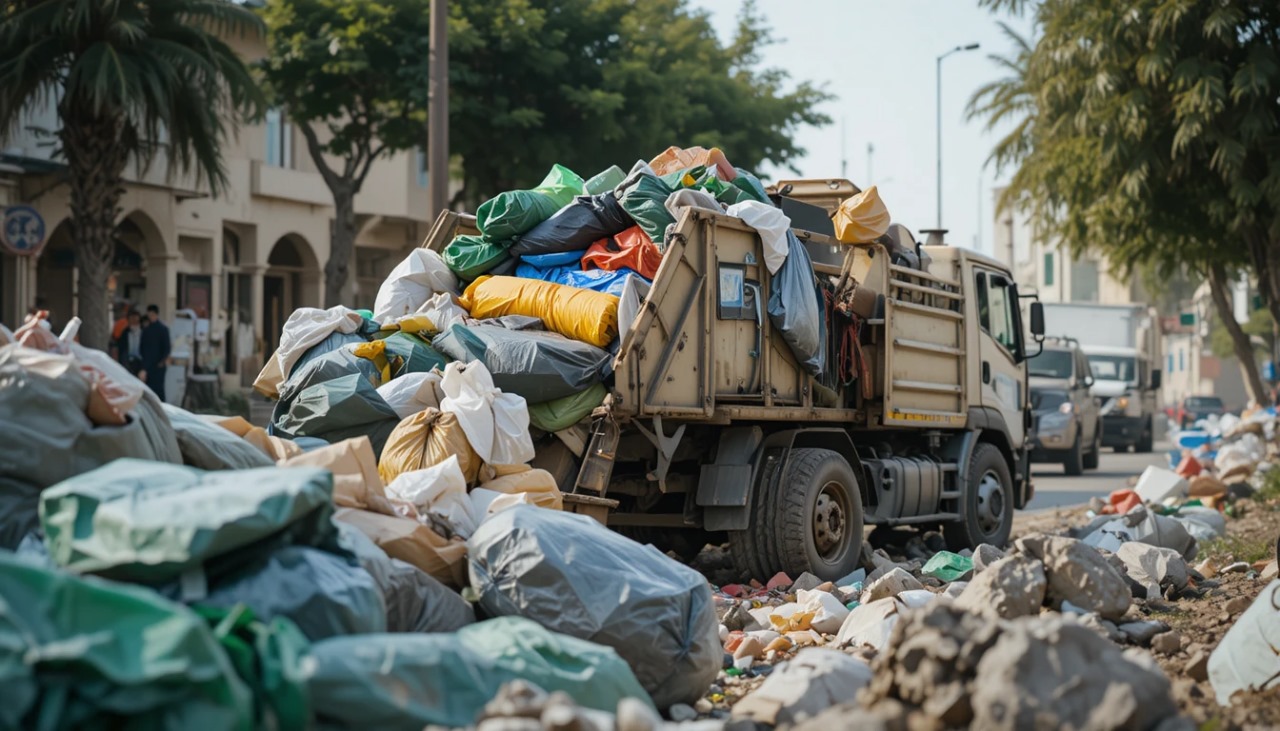
Conclusion: Effective garbage collection Dubai is a combined challenge of policy, infrastructure, technology, and behaviour. By separating waste at source, partnering with licensed collectors, and investing in circular solutions (composting, recycling, and waste-to-energy), we transform a cost center into a sustainability advantage. Togethermunicipality, businesses, and communities, we can accelerate Dubai’s transition to a cleaner, resource-efficient city.
FAQs
Q1: What is the best way for a small business to reduce waste collection costs in Dubai?
We recommend a waste audit, source segregation, contracting a certified recycler, and joining pooled collection services to lower per-pickup costs while increasing recycling revenue.
Q2: How should hazardous waste be disposed of in Dubai?
Hazardous waste must be stored in approved containers, handled by licensed transporters, and moved only with proper permits in line with UAE and Dubai regulations. Refer to municipal guidance for licensed service lists.
Q3: Are there penalties for illegal dumping or non-compliance?
Yes. Dubai’s evolving legal framework includes fines and enforcement for illegal dumping and mishandling of waste; businesses should ensure permits and record-keeping are up to date.
Q4: What alternatives to landfill does Dubai use?
Dubai is expanding waste-to-energy facilities, mechanical sorting, and recycling hubs to divert waste from landfills, aiming to close active landfill sites and recover energy and materials.
Q5: How can communities get involved in recycling programs?
Communities can host collection drives, volunteer at cleanups, use municipal drop-off points, and partner with businesses to fund local recycling kiosks and education programs.
Trusted Junk Removal Services in Dubai for Homes & Businesses
In Dubai?
Address: Office No.101, 10th Floor, Al-Shafar Tower, Business Bay, Dubai.
Google Map Location
Read More: Junk Collection Dubai | Sustainable Junk Removal Guide